Underfloor heating
Liquid screed for underfloor heating
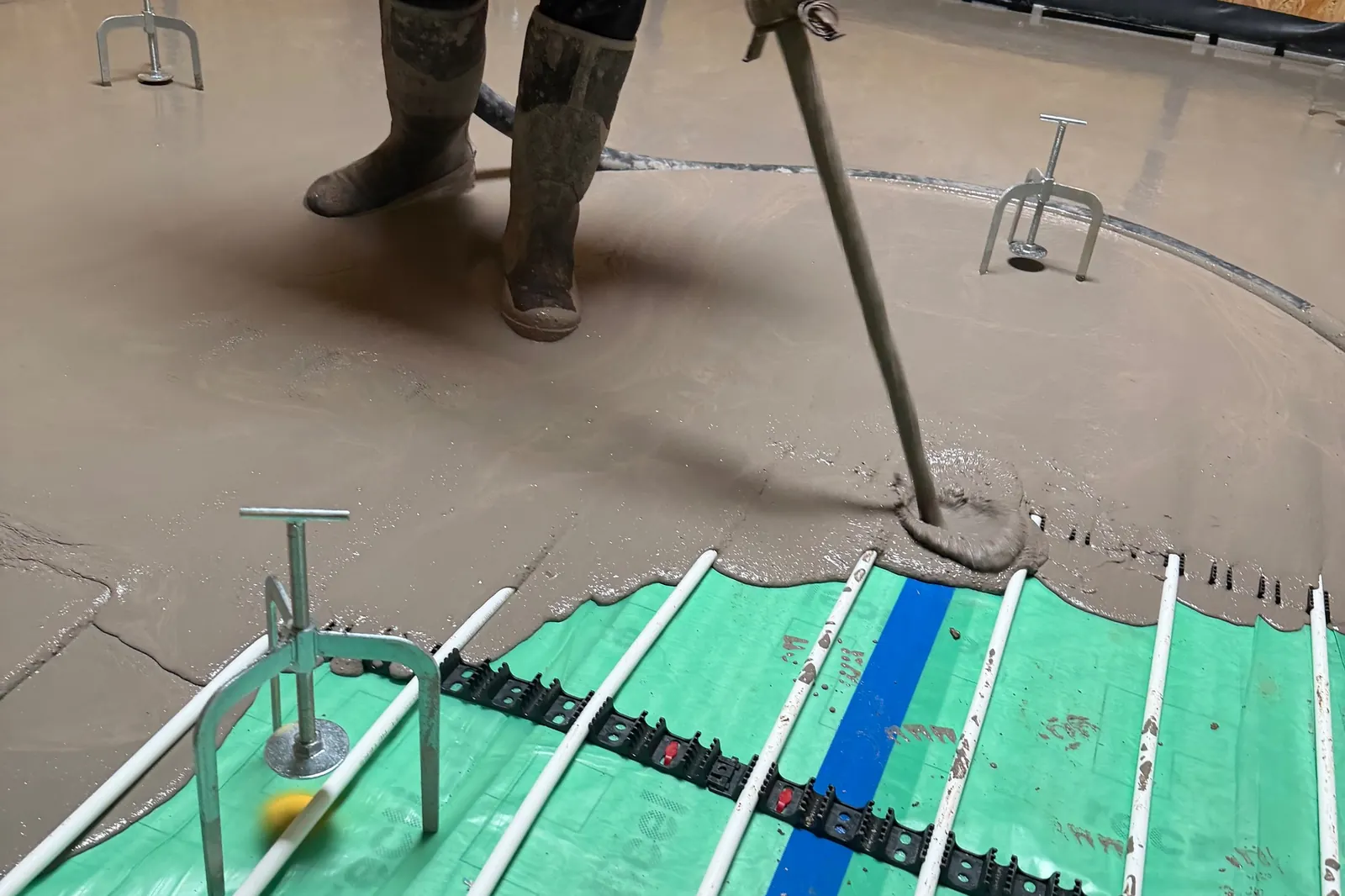
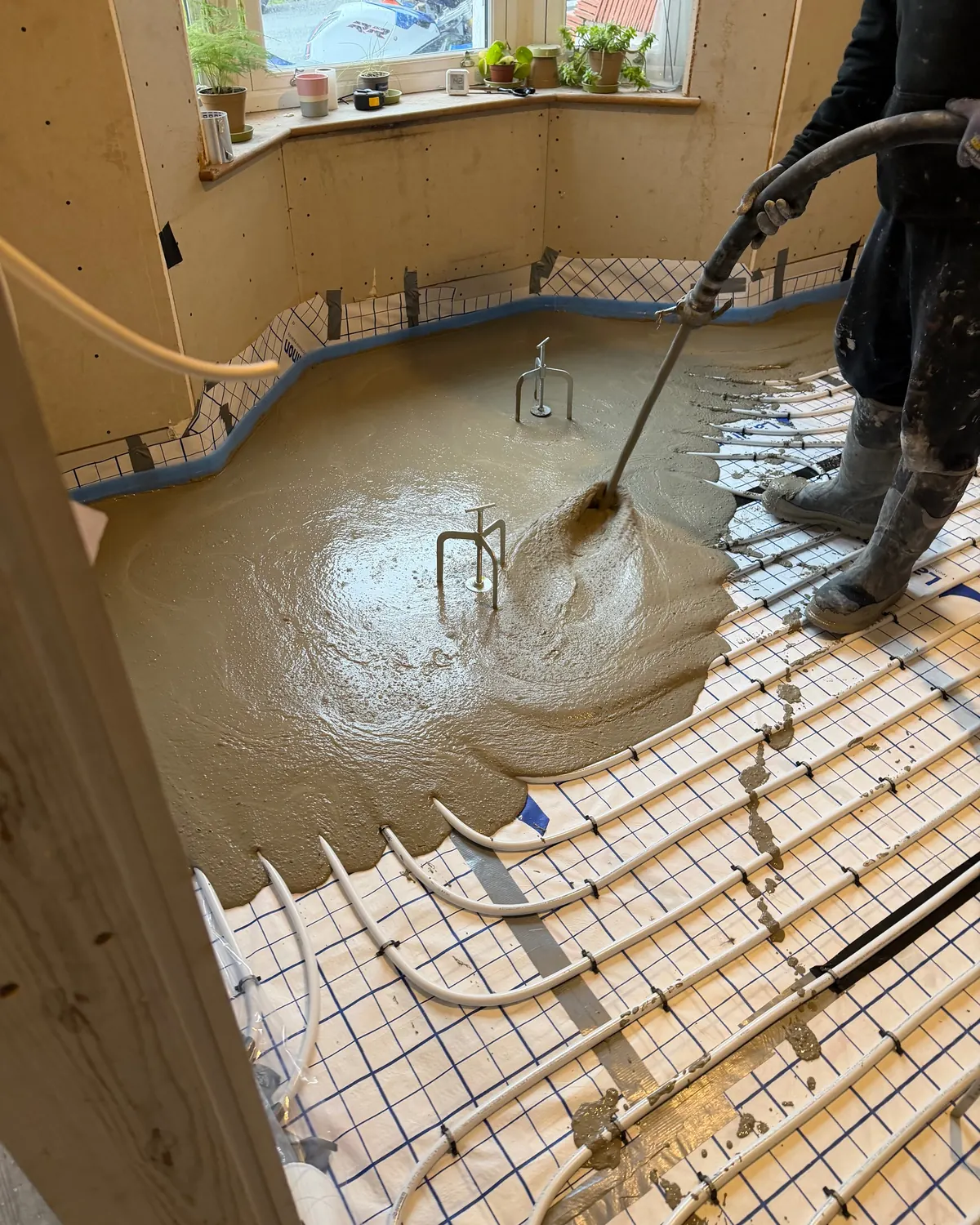
Liquid screed surrounds underfloor heating pipes completely, with a minimum of 25mm cover set by Cemfloor's guidance. We work alongside your heating installer to get the floor ready.
Why liquid screed suits underfloor heating
No voids around the pipes
A stiff sand and cement screed has to be compacted around the pipes by hand, and gaps can be left underneath them. Cemfloor is self-compacting: it flows around and under the pipework, so the pipe is in full contact with the screed.
Good heat transfer
Cemfloor's manufacturer data lists a thermal conductivity of up to 2.9 W/mK. With full contact and no air gaps, heat passes from the pipes into the screed and up to the floor surface efficiently.
Thinner screed, quicker response
Cemfloor needs a minimum of 25mm cover over the pipes. A thinner screed holds less mass to warm up than a thick traditional one, so the floor responds more quickly, and the space saved can go into extra insulation.
A typical floating floor with underfloor heating
Not to scale. Your floor build-up and depths come from your drawings and are confirmed at survey.
Before we pour: what your heating installer needs to do
We screed over underfloor heating installed by others. These checks protect your heating system and your floor.
- Pipes fixed down securelyLiquid screed is dense. Loose pipes can lift and end up with too little cover.
- System filled and pressure testedThe pipework should be full of water and under pressure during the pour, so any damage shows straight away.
- Membrane and edge strip in placeA polythene membrane over the insulation, joints lapped, and a perimeter edge strip around every wall and upstand.
- Levels agreedThe finished floor level is agreed so the screed gives at least 25mm cover over the highest pipe.
- Manifold protectedThe manifold and any upstands are protected and clear of where the screed will run.
- Heated bays plannedCemfloor limits heated bays to 100m² without joints, and joints should follow heating zones where needed.
Commissioning the heating
Cemfloor's guidance allows underfloor heating to be commissioned after 7 days, brought up to temperature gradually in line with their underfloor heating guidelines. Run this way, the heating can also help the screed dry before the floor covering goes down. We'll leave you the guidance on the day and go through it with your heating installer if that helps.
Electric underfloor heating is different: the heating manufacturer's minimum cover applies. Tell us which system you're using when you ask for a quote.
Underfloor heating questions
When can the underfloor heating be switched on?
Cemfloor's guidance allows the heating to be commissioned after 7 days, brought up gradually following their underfloor heating guidelines. Used properly, the heating can also help the screed dry.
Do the pipes need to be filled before the screed goes in?
Yes. The pipework should be securely fixed, filled with water and pressure tested before we arrive. A filled, fixed system can't float up or get damaged without anyone noticing.
Can screed go over electric underfloor heating?
Cemfloor's guidance is to follow the heating manufacturer's recommendations for minimum cover over electric systems. Tell us which system you have and we'll check it before quoting.
Got a floor to screed?
Send us the floor area and postcode and we'll come back with a clear written quote.