Service
Liquid floor screeding
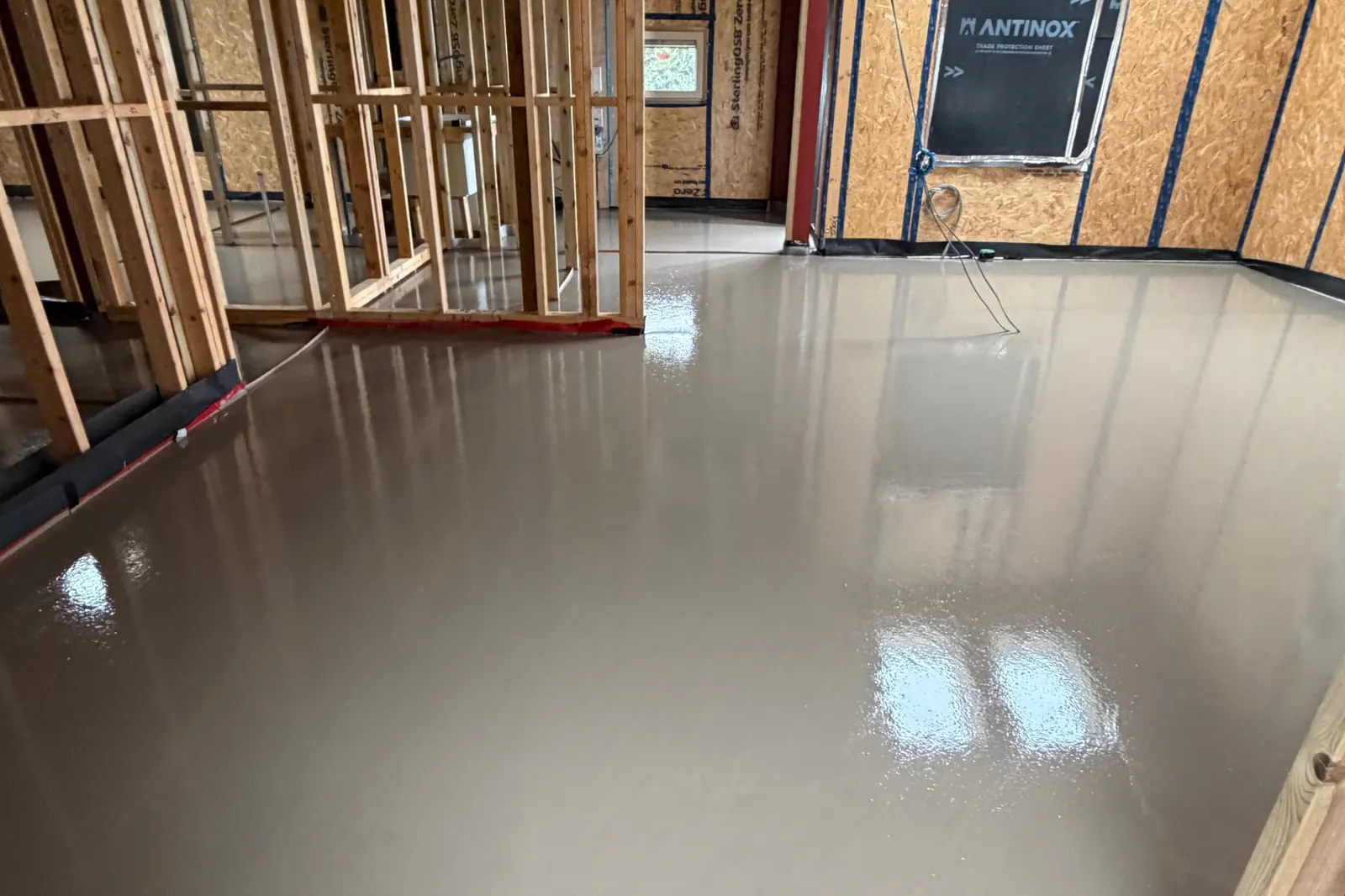
A flowing, self-levelling floor screed, pumped straight from the delivery truck to your floor and levelled in a single visit.
What is liquid screed?
A screed is the level layer that goes on top of the concrete slab or insulation, ready for the final floor covering. Traditional screed is a stiff sand and cement mix that's barrowed in, spread and hand-trowelled. Liquid screed is mixed at the plant to a flowing consistency, delivered ready to use and pumped into place, where it levels itself.
The screed we install is Cemfloor, a cement-based liquid screed. It's an alternative both to traditional sand and cement and to calcium sulphate (anhydrite) liquid screeds.
Where liquid screed is used
- Extensions and renovations, where the hose can run through the house so nothing is wheeled through it.
- New-build houses, where a whole ground floor can be poured in one visit.
- Floors with underfloor heating, where the screed needs to surround the pipes completely.
- Suitable commercial floors, laid to the commercial minimum depths.
It can be laid bonded to a concrete base, unbonded on a membrane, or floating over insulation. The method decides the minimum depth, which we confirm at survey.
Our process
How we install liquid screed
Most domestic floors are poured in a single visit. This is the order things happen in.
Survey and quote
We confirm the floor area, the average depth, the finished floor level and access for the truck and pump, then send a written quote.
Preparation by others
Your builder fits the insulation, polythene membrane, perimeter edge strip and any underfloor heating. Heating pipes must be fixed, filled and pressure tested.
Pre-pour check
We check the membrane is lapped and taped, the edge strip is in place and there are no gaps where screed could leak underneath.
Setting levels
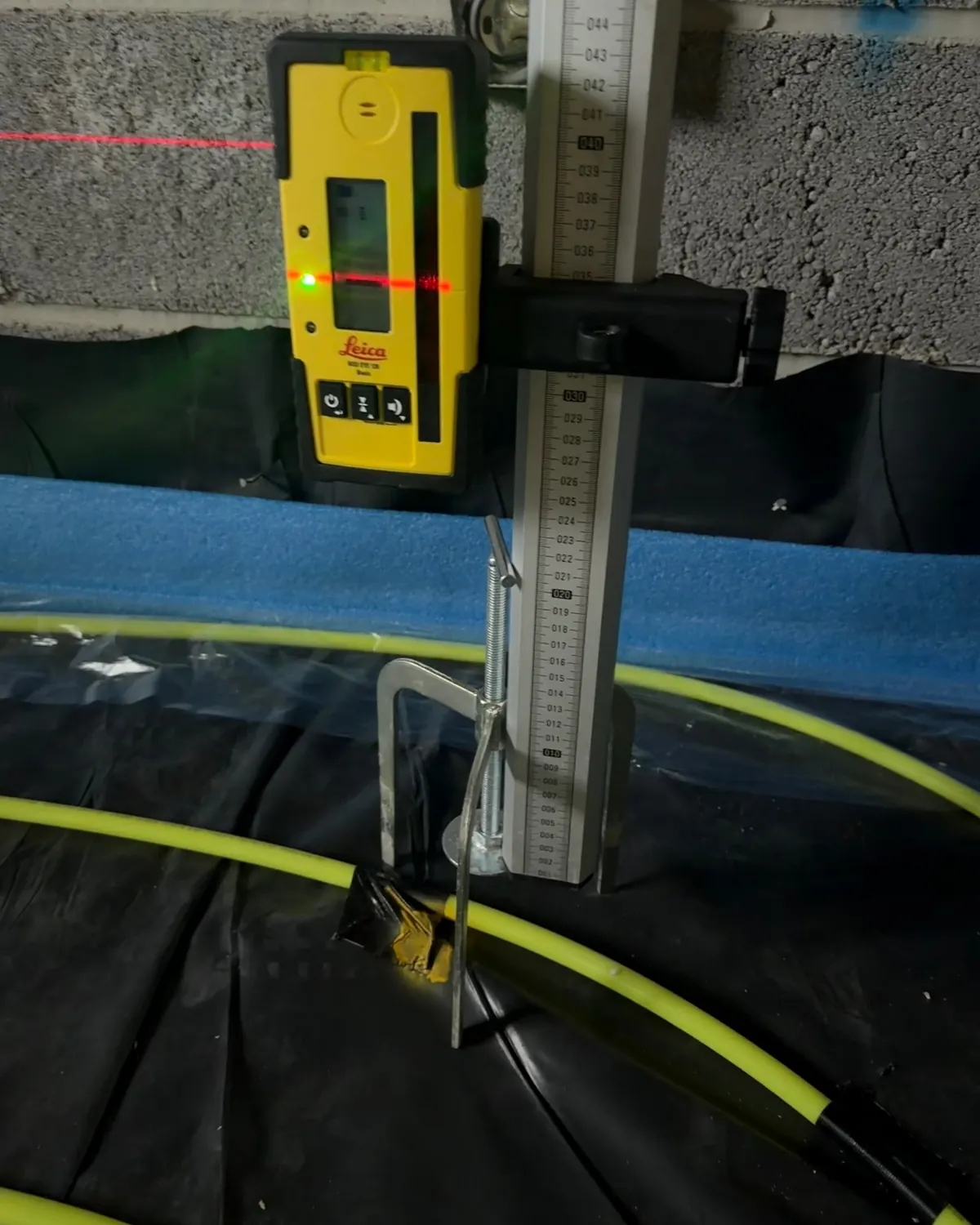
Level tripods are set across the floor with a rotating laser and staff to the agreed finished floor level.
Flow test
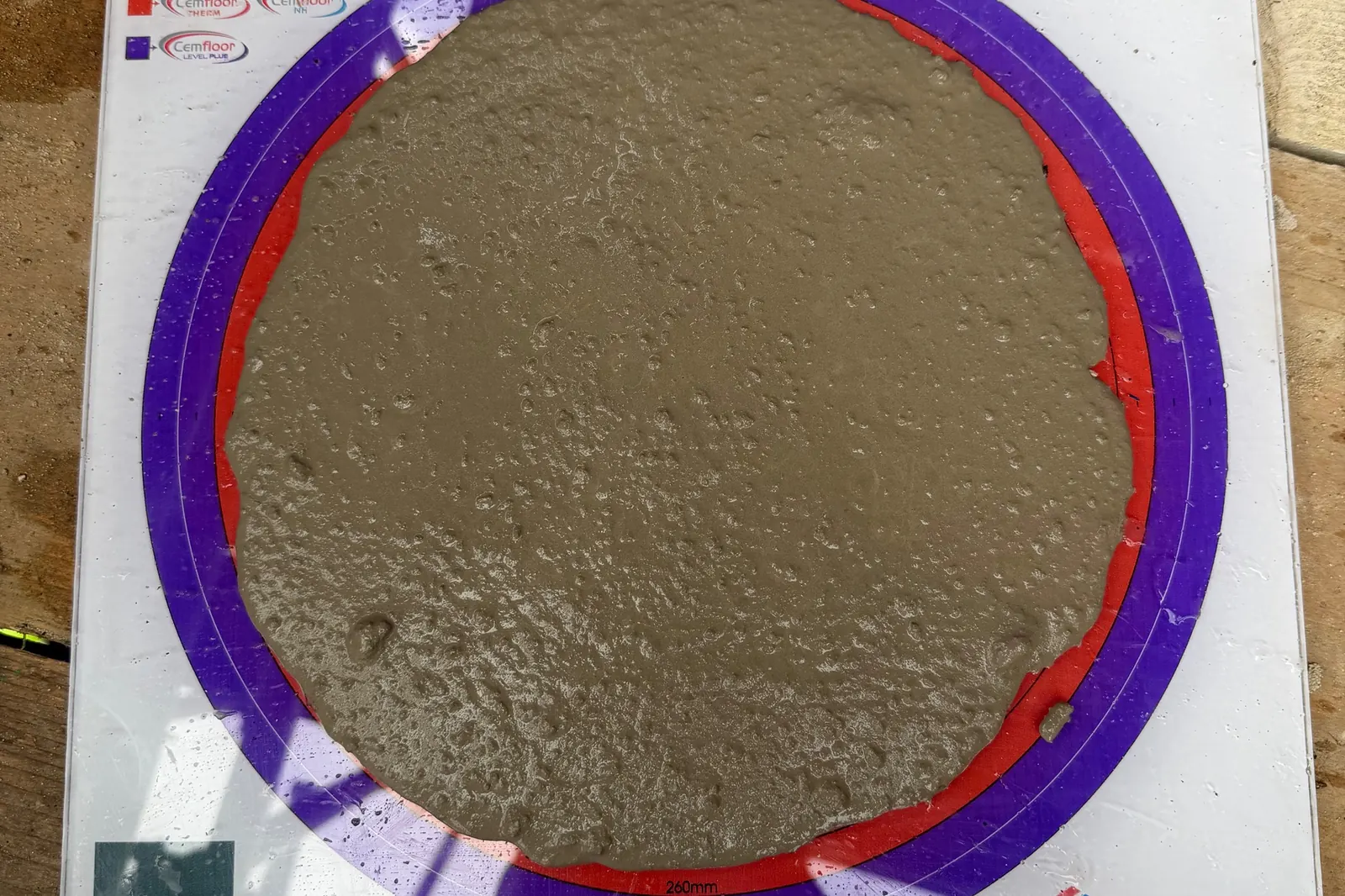
Before pumping, the screed's consistency is checked with a flow ring test against the manufacturer's target flow range.
Pumping and levelling
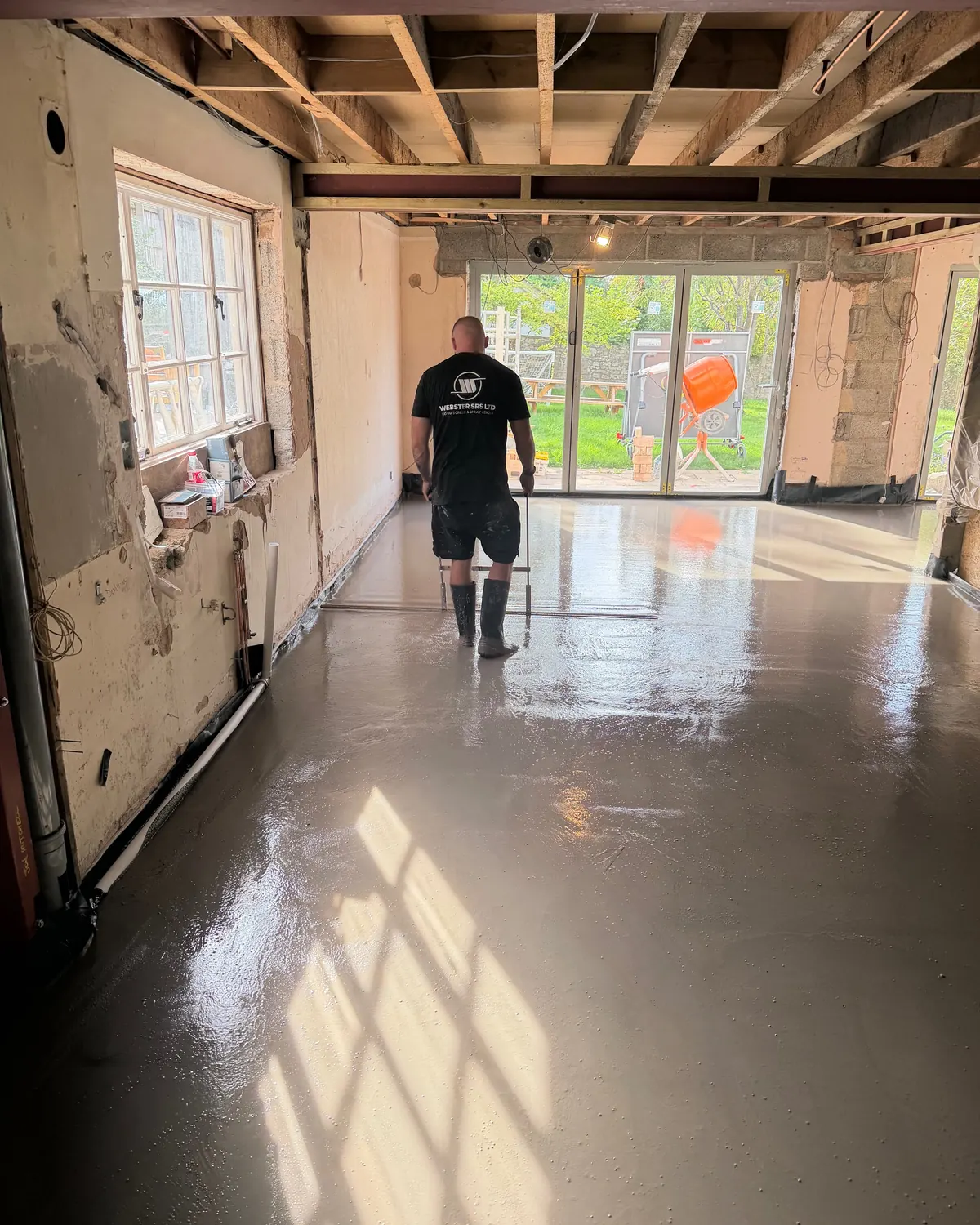
The screed is pumped through the hose to the floor, brought up to the level points, then dappled with a dappling bar to release air and settle a flat surface.
Protection
The room is closed up to protect the fresh screed from draughts and direct sun. Cemfloor's guidance allows light foot traffic after 24 to 48 hours.
Drying and aftercare
We leave aftercare guidance for drying, ventilation and, where fitted, commissioning the underfloor heating. The screed should be moisture tested before floor coverings go down.
Advantages over traditional screed
- Flatter resultSelf-levelling screed avoids the highs and lows of a hand-trowelled finish.
- Thinner sectionsCemfloor's minimum floating depth is 35mm in domestic buildings, so more room can be left for insulation.
- Faster to layA pump crew can lay far more floor in a day than a team barrowing and trowelling by hand.
- Better with underfloor heatingFlowing screed fills around the pipes without leaving voids.
- Less disruptionScreed comes in through a hose, not wheelbarrows through the house.
What affects the price
Liquid screed is priced on the volume of screed, which comes from the floor area and average depth, plus the labour and pumping. Screed is delivered in truckloads, so small floors can pick up a part-load charge from the supplier. Access matters too: we need the delivery truck close enough to the property for the pump and hose.
To quote, we need the floor area in m², the depth if you know it, the postcode and whether there's underfloor heating. Send your details and we'll come back with a written quote.
Got a floor to screed?
Send us the floor area and postcode and we'll come back with a clear written quote.